

In short
- Brands rate UGC performance 7.32 out of 10, above its strategic importance.
- In ads, it first improves CTR, followed by conversion and ROAS; in organic content, reach and views stand out.
- The main problem is not performance, but measuring ROI with clear tracking before launching campaigns.
In this article
I’m Miguel, co-founder of HICARI, and this is the cheeky question I’ve heard most often from companies that haven’t tried UGC yet: “Okay, but… does this really work, or is it just a trend?” It’s a perfectly valid question to ask before moving budget to a new channel—everyone wants proof. Even more so if they’ve had a bad experience in the past.
So instead of answering with the usual opinion, we turned to the data from the I UGC Study Spain: 1,012 real requests managed on the platform and a survey of brands already using UGC. Here’s what the numbers say about whether it works, how much, and why almost no one can say with certainty what their return is.
Other summaries of the UGC Study 2026:
The good news: it does work—and better than expected

Brands rate UGC’s strategic importance at 6.53 out of 10. But when you ask them about the performance they have actually achieved, that score rises to 7.32 out of 10. UGC performs better than its own position in the content plan would suggest—something that almost never happens in marketing, where expectations normally run ahead of results.
In other words: brands that already use it confirm its value with facts, not intentions. If you’re still hesitating, you’re hesitating about something that is working better than expected for those who try it.
Where the results show: first they see you, then they buy from you
Breaking it down by channel, the same pattern appears in both paid and organic activity.
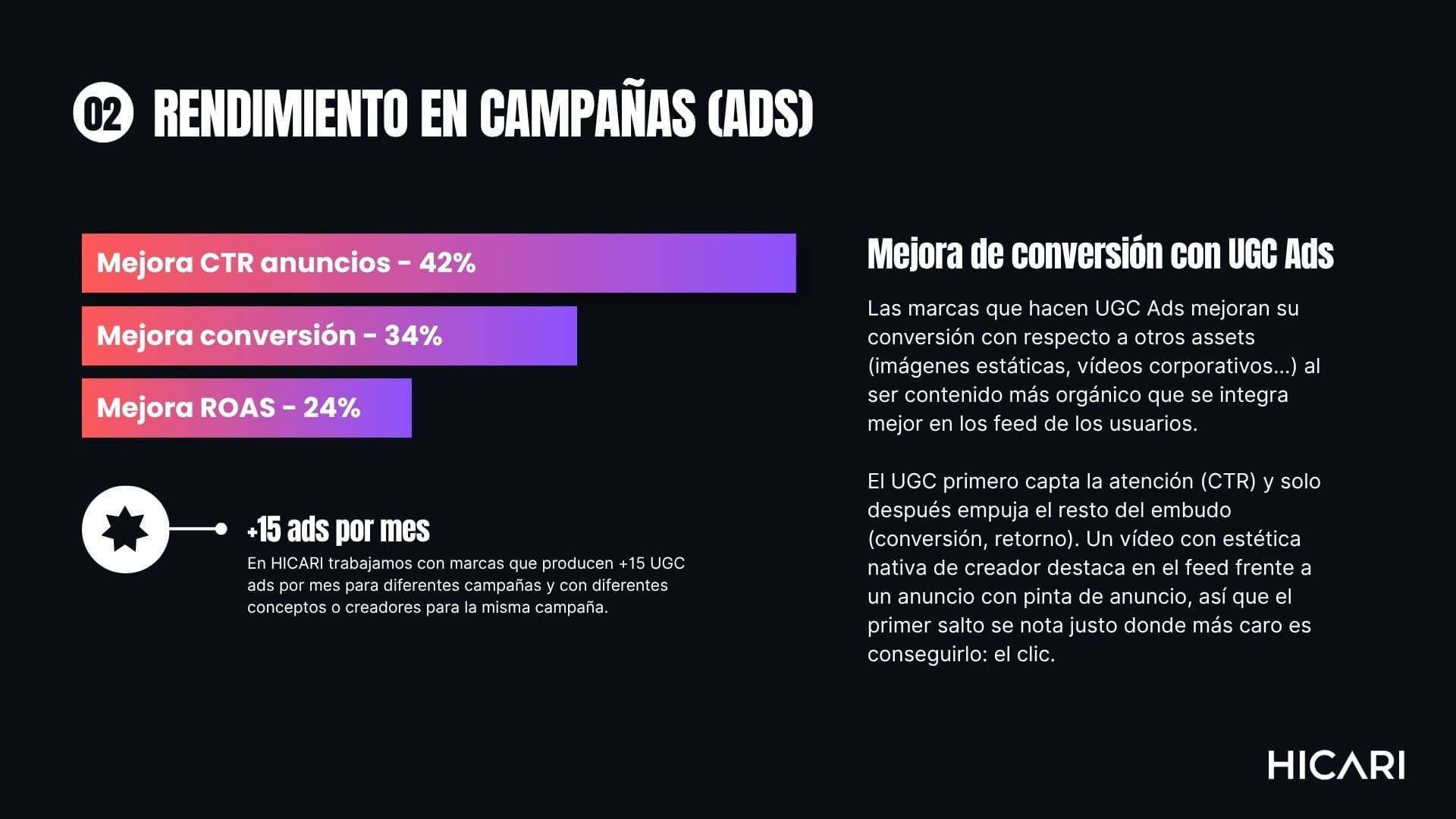
In paid campaigns (ads):
- Improved CTR in ads, the metric reported by the most brands
- Improved conversion
- Improved ROAS
This really matters to you: Meta Ads A/B Test: UGC video vs static image
On organic social media:
- Greater reach / views, the most frequently cited result
- Content perceived as higher value
- Improved engagement
- Improved retention
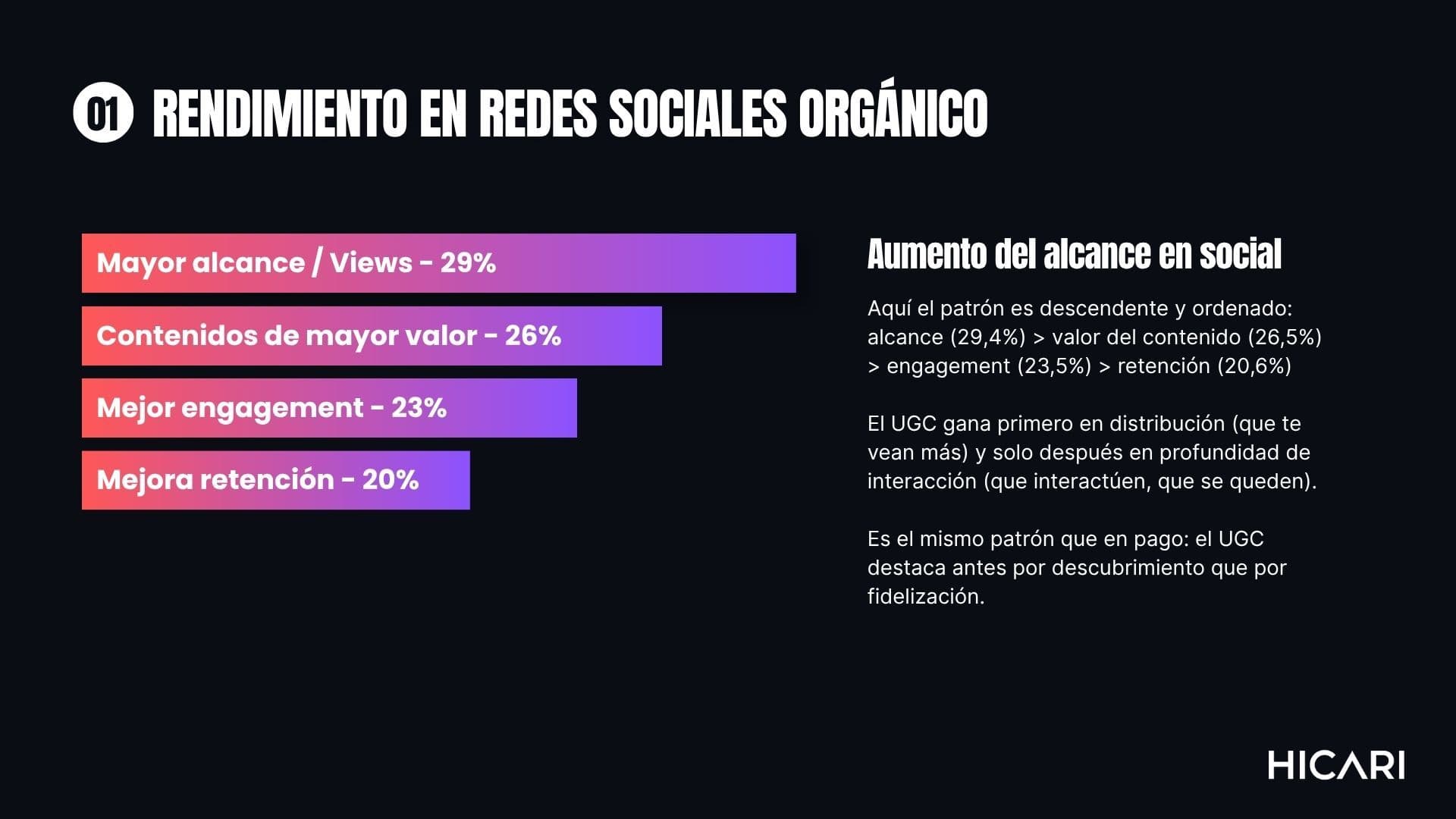
In both cases, the first thing to improve is attention (CTR, reach), and only afterward depth (conversion, engagement). It makes sense: a creator-style video blends into the feed as content, not advertising, so the first click—the first time someone stops scrolling—is where the difference is most noticeable. And that first step is precisely the most expensive one to achieve with any other format.
The problem isn’t that it doesn’t work. It’s that hardly anyone measures it
Here’s the finding that concerns me most in the study, and also hides the greatest opportunity: when we asked brands whether they had measured the specific ROI of their UGC campaigns, the answers were split among those who do measure it with tracking codes, those who acknowledged they had not seen a clear return, and those who simply did not have that information because another team manages it (paid media, for example).
In other words: most UGC investment today is made without clear return tracking. It’s not that UGC doesn’t work; very few brands have set up the system needed to prove it with their own numbers.
This connects directly with another finding from the study: when we asked about the biggest challenge with UGC, “measuring results” appeared as one of the friction points, although well behind finding the right creator and content quality. It’s a real problem; brands simply still give it less priority than they should.
Want UGC videos that work for your brand?
Create your free brand account and receive proposals from creators. You only pay per video.
If you’re unsure whether to invest, here’s what I’d tell you
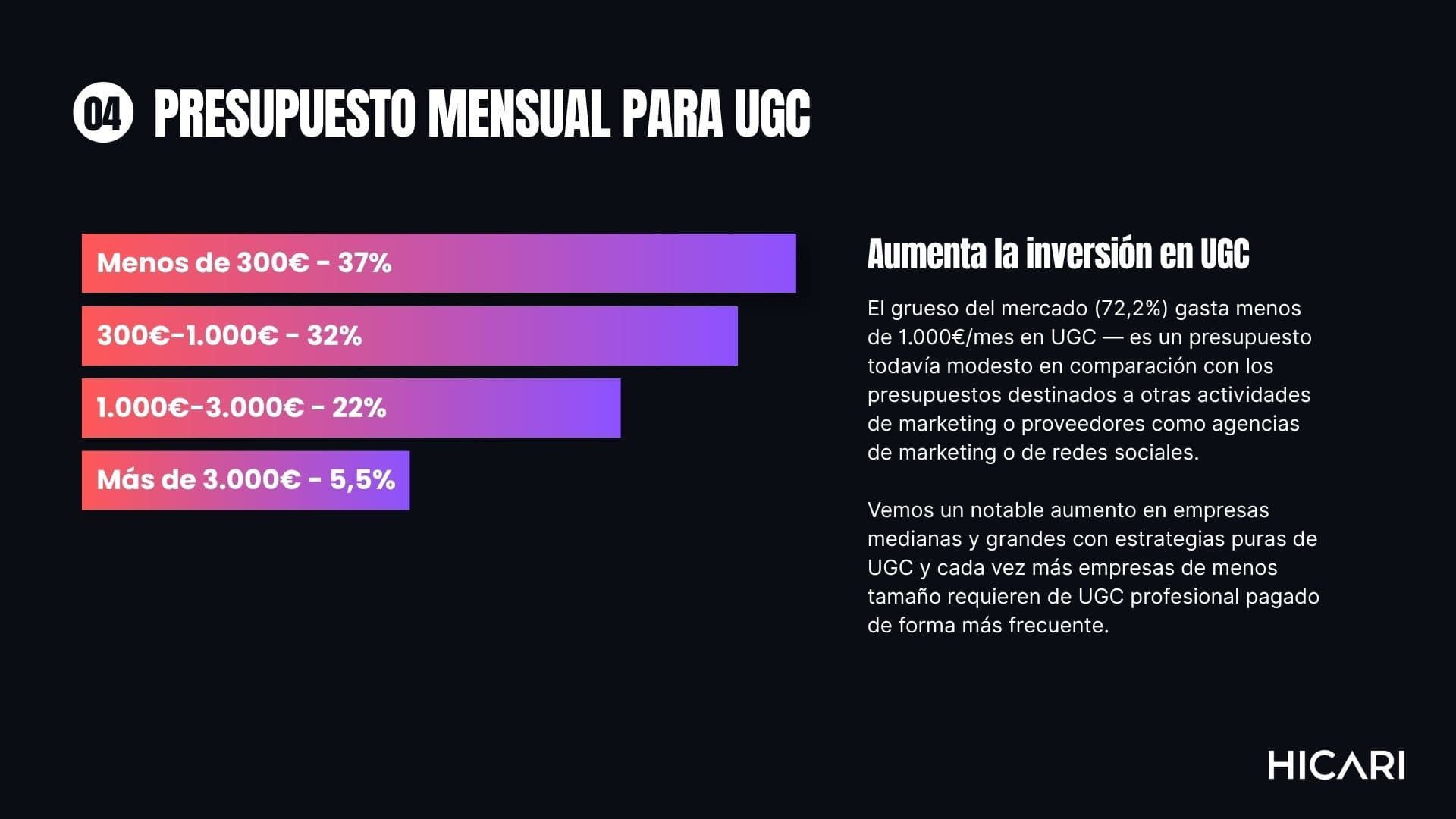
You don’t need to start with a large budget. 72% of brands already using UGC spend less than €1,000 a month, with many spending less than €300. It’s not an all-or-nothing bet; it’s a channel you can test with a genuine test budget and scale based on what you see in your own numbers.
What I would recommend from the outset: set up tracking before launching your first campaign, not afterward. UTM codes, conversion pixels specific to each asset, and a direct comparison against your current content. That way, you won’t end up as one of the brands using UGC that can’t say with certainty whether it’s working—you’ll have the answer in data, not gut feelings.
What’s the UGC red flag?
UGC does not have a performance problem. It has a measurement problem. The data says it works—and works better than brands expect. What is missing is for more brands to get organized so they can prove it with their own numbers, rather than just intuiting it:
- A/B testing ads with traditional formats (static ads, branded spots…)
- UGC vs other content in organic social media…
If you want to see the rest of the study: real prices, what brands look for in a creator, and how AI is positioning itself against UGC. Here is the full report:
HICARI · UGC Study 2026 Download the full study, free of charge 1,012 real platform requests and a survey of leading brands such as Iberdrola, Flexicar, MasterD, and Impress, all in one report. Download the study for free →
Frequently asked questions
What results does UGC improve in paid campaigns?
In paid campaigns, brands mainly report improved CTR in ads, followed by improvements in conversion and ROAS. Attention usually improves before the depth of the result.
Why can’t many brands demonstrate UGC’s return?
Because a large part of the investment is made without clear return tracking. Some brands use tracking codes, while others see no defined return or do not have access to data managed by another team.
How does the study recommend testing UGC?
You can start with a test budget and scale according to your own numbers. It is also advisable to set up tracking before launching the first campaign, with UTM codes, conversion pixels, and a comparison with your current content.
For brands
UGC videos for your brand
Free sign-up. Get proposals from creators and pay only per video.
Create a brand accountor talk to the team