In short
- Influencer marketing provides reach and visibility, but it can involve high costs, less authenticity and non-reusable content.
- UGC offers authentic, versatile and scalable content, with ownership and reuse rights for the brand through HICARI.
- Combining UGC and influencers makes it possible to maintain a constant flow of content and leverage reach during launches or key moments.
In this article
Updated: March 1, 2026.
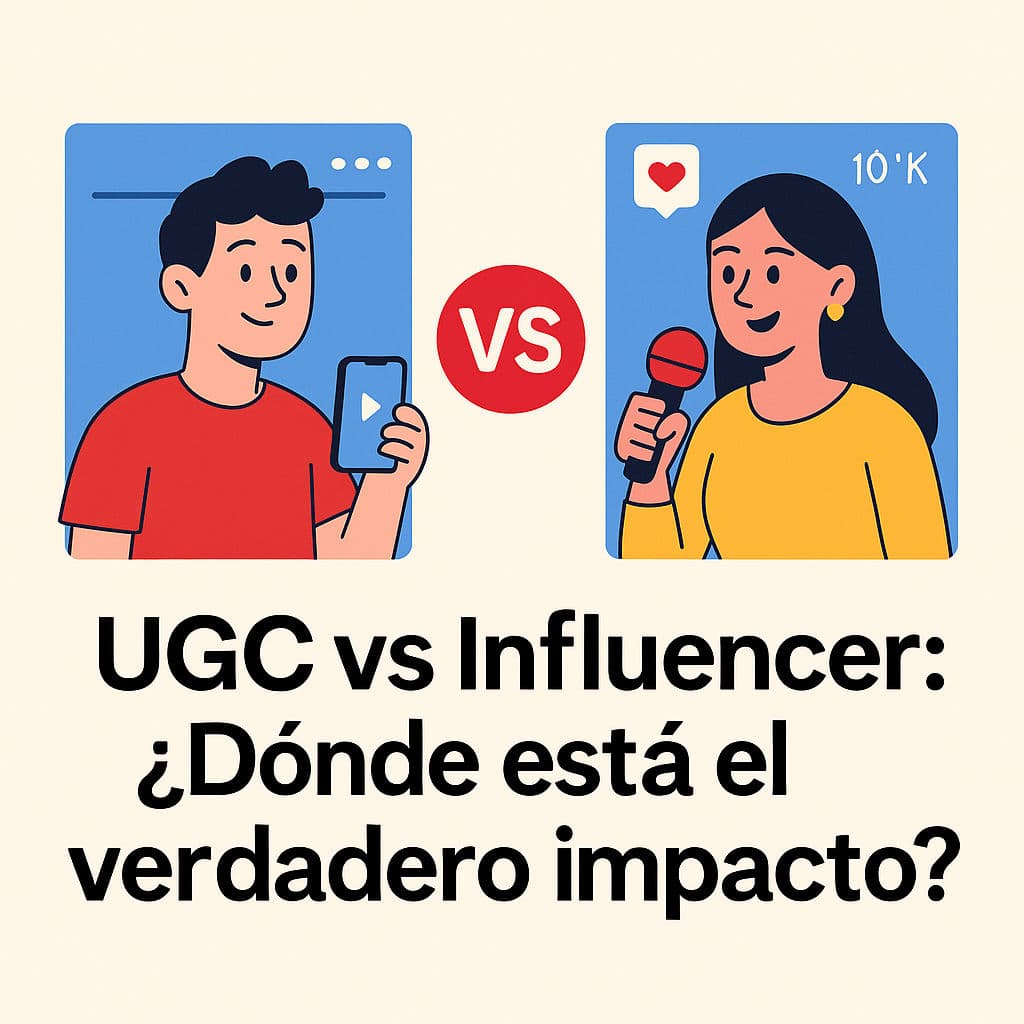
In the world of digital marketing, the terms UGC and Influencer Marketing are often mixed up. And many professionals still don’t understand their differences and advantages. But although both involve content created by people outside your brand, they are not the same.
Not even close.
And if you’re looking for real results, not just numbers (some guru will tell you that reach is the KPI and be perfectly happy with that), it’s important to understand the difference.
Influencer Marketing: reach, but at what cost?
Influencer marketing is based on paying people (influencers or content creators with large audiences) to talk about your brand. Its strength lies in visibility: a single post or story can reach thousands of people.
But here are the drawbacks:
- High costs: many influencers charge substantial amounts for a post, with no guarantee of return. From €1,000 to more than €30,000 for a single post.
- Limited authenticity: users are increasingly saturated with paid collaborations. Trust is diluted. Not to mention that they advertise several brands every day. It gets tiring. Their followers are no longer so easily influenced amid so much ad saturation.
- Inflated engagement: purchased followers, bots and doctored statistics are a common reality.
- You don’t own the content: you can’t reuse that content without paying more.
- Extra costs: costs for influencer platforms, fees for UGC agencies (¡create UGC videos for your agency!), timing issues, egos and these profiles’ abuse of influence.
Real examples of influencer costs
| Type of Influencer | Approx. followers | Price per post on IG or TikTok |
|---|---|---|
| Micro influencer | 3,000 – 30,000 | €150 – €500 |
| Mid-tier influencer | 30,000 – 150,000 | €500 – €2,000 |
| Macro influencer | 200,000 – 1M | €2,000 – €20,000 |
| Celebrity / Top tier | +1M | +€20,000 |
And on top of that, you have to add: agency fees (normally +20%), management, usage rights clauses, timing, etc.
UGC: real content that converts
UGC, or user-generated content, is created by people who use your product in real life. They don’t have to be famous. What matters is that they look like real customers… and that sells, ladies and gentlemen.
Uses of UGC:
- For your brand: it’s the best option. Request content for your own use, for organic, paid, and web.
- On UGC creators’ social profiles: you can ask UGC creators to upload the content to their channels, but the reality is that you’ll need dozens or hundreds of UGC creators to see an impact.
- Combine both: if you can combine both, it’s a good option. You can do this on HICARI, since you provide the instructions yourself in the brief.
Advantages of UGC:
- Authenticity: the content is perceived as more natural and trustworthy.
- Conversion: users trust other users’ opinions more than direct advertising.
- Versatility: you can use that content on your website, ads, social media, email marketing, etc.
- Cost efficiency: you can get more content for less investment.
- Ownership: if you do it through platforms like HICARI, the content is yours and you can reuse it freely.
Real examples of UGC costs
| Type of content | Estimated price on HICARI |
|---|---|
| Video (1 creator) | €70 – €180 |
| Pack of 6 UGC videos | 399 – €450 |
| 8 videos every month | €500 – €756 |
| Editing + rights included | Included (at no extra cost) |
So what’s better? UGC or influencers?

It’s not about choosing one or the other. It’s about strategy.
- If you want quick reach and brand visibility, influencer marketing can help… but be prepared to invest.
- If you’re looking for authentic, scalable content that you can repurpose to sell, UGC is your best ally.
HICARI tip: many brands are starting to use influencers as UGC creators. In other words, they don’t pay them for their reach, but for producing quality content that they can then use in their campaigns. This way, they get the best of both worlds.
Our UGC platform features all kinds of creators—sign up now!
Want UGC videos that work for your brand?
Create your free brand account and receive proposals from creators. Pay only per video.
How to combine UGC and Influencer Marketing intelligently
Using both strategies is not only possible, but can also be one of the most profitable decisions for your brand. Here are some realistic and actionable ideas:
1. Create a hybrid campaign with influencers and UGC
Example: a cosmetics brand hires 2 influencers to launch a new product and, at the same time, launches a UGC challenge among its customers: “Upload your routine with the hashtag #GlowReal and win a year’s supply of free product”. To do this, it commissions 10 UGC videos through HICARI and asks the creators to upload them to their social media, which the brand then reposts.
→ Result:
- The influencers generate visibility.
- Customers create credible content.
- Social media users join the challenge and upload free content.
- The brand obtains more than 100 reusable pieces of content.
Learn here—you can listen to our episode on UGC campaigns vs. influencer campaigns.
Hit play!
2. Ask your influencers for reusable content (professionalized UGC)
Example: a nutrition brand pays a fitness influencer not for their post, but to record 3 videos explaining how they use the products. The content is then used in TikTok Ads and Meta Ads under the brand’s profile. In other words, it is used as UGC Ads.
→ Result:
- Lower cost than a full campaign.
- Higher advertising performance with “native” content.
Important note: with HICARI, you don’t have to worry about negotiating rights and usage permissions. All content creators deliver to brands comes with full usage rights on the brand’s owned channels and paid media. You simply have to choose the creator you like best!
3. Consistent UGC + influencers at peak moments
Example: a fashion retailer creates videos for its social media and website by purchasing UGC content all year round, with around 5–10 pieces per month. At the same time, it activates collaborations with influencers at specific moments to amplify its visibility.
→ Result:
- A constant flow of valuable content at a low cost.
- Visibility at key moments.
In summary:
| Characteristic | Influencer Marketing | UGC (User Generated Content) |
|---|---|---|
| Reach | High | Medium/Low |
| Cost | High | Low |
| Authenticity | Medium | High |
| Conversion | Medium | Medium |
| Content ownership | Limited (unless agreed otherwise) | Complete (on HICARI) |
| Repurposing | Limited | Free (on HICARI) |
| Ideal for | Branding, launches | Performance, Ads, daily social media |
| Reusable in Ads | Not always | Yes |
But that’s not all—what if we compare the UGC content sent to brands for them to post on their profiles VS UGC content posted by the UGC creators themselves:
UGC for brands VS UGC content posted on UGC creators’ profiles
| Feature | UGC for brands (delivered content) | UGC published by creators on their profiles |
|---|---|---|
| Where it is published | On brand profiles, websites, campaigns, online stores | On creators’ personal profiles (usually with few followers) |
| Main objective | Strengthen brand communication, improve conversion, generate trust and relevance | Expand social reach, diversify touchpoints, generate social proof |
| Usage duration | Usage defined in the brief: organic, paid, web, etc. (including long-term) | Usually ephemeral content or content with limited visibility over time (stories, reels) |
| Potential impact | High performance impact when used strategically (ads, landing pages, social proof) | Moderate impact, with a greater focus on authenticity and social validation |
| Audience | Brand audience (loyal followers, potential customers, segmented audiences) | Creator’s audience (usually small, but closer and more niche) |
| Key metric | CTR, ROAS, conversion rate, brand channel engagement | Interactions, comments, virality, profile visits |
| Recommended use | Websites, paid media campaigns, product pages, brand profiles | To activate social proof, launch products, generate organic conversation |
| Cost per piece | The same (only on HICARI) | The same (only on HICARI) |
Important: on HICARI, you can also request UGC videos on creators’ profiles. Keep in mind that they are not influencers, and their Instagram and TikTok profiles usually range from 500 to 3,000 followers.
Want to try UGC content for your brand and forget about endless briefs?
Go to hicari.io and start receiving real videos, authentic and ready to sell. At your own pace. On your terms. And without the posing.
Ready to receive tailor-made UGC videos?
Choose the creator, publish your brief on HICARI and receive content ready to use in campaigns, social media or eCommerce. Pay only per video.
Frequently asked questions
What is the main difference between UGC and influencer marketing?
Influencer marketing pays profiles with large audiences to talk about a brand and provide visibility. UGC is created by people who use the product, and the brand can use it on its website, in ads, on social media or in email marketing.
When is it better to use UGC instead of influencers?
UGC is a good fit when you are looking for authentic, scalable and reusable content to drive sales. Influencer marketing can help if you prioritise rapid reach and brand visibility, although it requires a greater investment.
Can UGC and influencers be combined in the same strategy?
Yes. You can maintain a constant flow of UGC content and activate collaborations with influencers at specific moments, or ask influencers to create reusable videos for brand campaigns.
For brands
UGC videos for your brand
Free sign-up. Get proposals from creators and pay only per video.
Create a brand accountor talk to the team