

In short
- UGC brings authenticity, credibility and speed, and can improve engagement, conversion and the humanization of a brand.
- Design the strategy around measurable objectives, platforms, hooks, suitable creators, a calendar and continuous optimization.
- Brands use formats such as POVs, vlogs, testimonials and educational content to achieve reach, trust, leads and engagement.
In this article
Brands that want to make a splash on social media are no longer competing to have the most expensive spot or the best corporate storytelling (the whole thing about having the CEO talk about the company matters bugger all to everyone, that kind of sycophancy is better left to LinkedIn). Companies on the main social platforms (Instagram, Facebook, TikTok, YouTube, X) compete on authenticity, credibility and the speed of producing real content.
Marketing gurus (for example) and social networks talk about publishing 6/10 videos every day instead of 8/10 videos every so often. We believe in letting the account and videos breathe and publishing 3–5 times a week, no more.
Content generated by professional creators (UGC) has become one of the most effective assets for modern social media: it boosts engagement, improves conversion and humanises any brand… yes, people on social media don’t want you talking about your brand all the time (except iPhone fanboys)
But… How do you design a truly UGC-based social media strategy? What steps should you follow? How do you measure it? What are the common mistakes? And most importantly: what real examples can we use as a model?
Why UGC is the foundation of the best social strategies
Before getting into tactics, let’s understand why UGC has become the backbone of social content, thanks to its benefits.
Data to back it up
- Users trust content that feels authentic and human far more than polished, professional ads.
- UGC achieves better retention and engagement metrics than most traditional social media formats. With our client Quehoteles.com, we achieved +400% views organically with UGC videos.
- Platforms such as Instagram and TikTok are prioritising content that feels organic and native to the platform, both in ads and organic content.
At HICARI, we see this every day on our UGC platform. Brands that integrate UGC into their social media and campaigns not only increase impressions and reach, but also generate quality engagement and traffic that converts.
UGC-based social media strategy
A social media strategy based on UGC is a structured plan to create, publish and amplify authentic content produced by professional creators, with a purpose that goes beyond “making pretty content”.
It includes:
- Defining clear objectives for each channel
- Identifying audiences and platforms
- Scripts and briefs designed around realistic behaviour
- Hooks and native formats (POV, testimonials, storytelling, vlogs, educational content, entertainment)
- Publishing and measurement plan
And most importantly: it is not about influencers or asking your fans for content, but about working with creators who produce content for your brand as part of the strategy, with defined objectives and metrics.
Although it can be combined with posts on the creators’ own social media accounts or even collaborative content (on Instagram) to make it feel even more natural.
You may be interested in listening to our TODO ES CONTENIDO podcast, where we talk about marketing—and in this episode, a company’s social media budget and how it should be allocated in the best possible way:
Steps to create your own UGC social media strategy
Step 1 — Define your objectives
Before creating a single video, define measurable KPIs:
- Do you want to increase engagement? (brand awareness)
- More traffic to the website? (sales)
- More views on the videos or on average? (brand awareness)
- More profile clicks? (brand awareness)
- More sales from social media? (sales)
Your objective will define the video topic, video length, format, hook and call to action (CTA).

Step 2 — Choose your target platforms
Not all social networks work the same way—and neither does content.
| Platform | Type of UGC that works best |
|---|---|
| TikTok | Quick clips, POV, tips, challenges, vlogs |
| Instagram Reels | How-tos, comparisons, lead magnets |
| YouTube Shorts | Mini tutorials, demos, interesting facts |
| Real-life cases and professional testimonials |
Step 3 — Creativity and scripting with powerful hooks
A good hook is found in the first 3 seconds, although the structure is changing depending on the type of video, and sometimes it is not found at the beginning and/or there are multiple hooks throughout the content.
Examples of hooks (copy) that work:
- “This is what happened when I tried X…”
- “I used to use Y, now I use this…”
- “I didn’t know this could happen…”
- “If you’re [buyer persona], take a look at this…”
- “Santa Claus doesn’t exist, but…” (something that generates controversy)
The best hooks are not random; they are designed to answer a user’s question or a genuine concern.
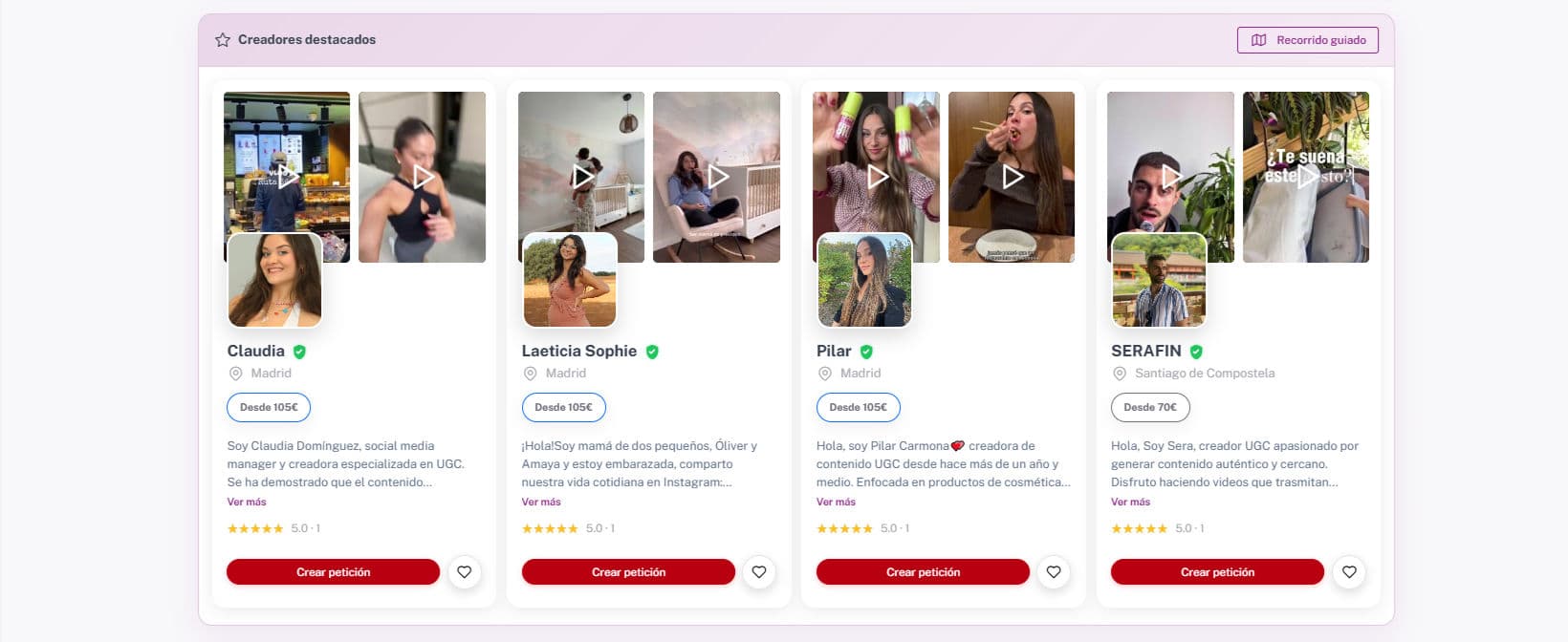
Step 4 — Selecting UGC creators (not influencers)
The UGC creators who perform best on social media are:
- They are not influencers
- They do not need a community
- Their value lies in how they record, not in how many followers they have
- They have a natural style and connect well with native social media formats
- They are charismatic, know how to communicate and speak to camera
At HICARI, brands choose creators based on:
- Visual style
- Tone of voice
- Subject-matter niche
- Ability to tell real stories
- Sociodemographic profile (age, gender…)
Step 5 — Publishing and scheduling
UGC is not about publishing “to showcase the product.” UGC means your actors need a schedule that includes:
- Mix of formats (POV, vlog, educational, sketch)
- Frequency (at least 3 videos/week)
- Pacing (consistency)
- Variations by channel
Step 6 — Measurement and optimisation
The metrics that really matter in UGC strategies are:
- Real engagement
- Video retention
- Saves and shares
- CTR
- CPV
- Conversions from social media
- Time spent on page
These metrics let you know which videos work, which formats you should repeat and when to scale production.
Real examples of UGC strategies implemented by brands with HICARI
To better understand how a UGC-based strategy works, let’s look at real examples of brands that have implemented one with concrete results.
Maxibon – Trends
- Objective: reach and telling real stories to connect better
- UGC strategy: trends and storytelling- and vlog-style content featuring the product without making it the protagonist
- Result: 4x organic reach.
- Watch videos
MasterD – Credibility and trust
- Objective: showcase real stories from students and professionals.
- UGC strategy: testimonial videos from the student’s perspective, with emotional clips.
- Result: content that humanises the training experience and generates qualified leads.
- Watch videos
Holaluz – Humanising technical communication
- Objective: communicate its offers and tariffs in a human, approachable way that is more scalable than using ads.
- UGC strategy: brief first-person explanations and natural testimonials.
- Result: higher engagement than with traditional corporate content.
- Watch videos
QueHoteles.com – Travel inspiration and decisions
- Objective: branding and reach through informative, useful and shareable content
- UGC strategy: informative and useful content related to its sector
- Result: significant increase in views and engagement
- Watch videos
PlayUZU – Social proof and fun
- Objective: connect with a young, authentic and dynamic audience.
- UGC strategy: POV formats, real reactions, sketches and game comparisons.
- Result: content that feels organic and performs very well on TikTok and Reels.
- Watch videos
Carrefour Entradas – social content focused on experiences
- Objective: showcase creators’ personal experiences enjoying events and tickets
- UGC strategy: videos recorded at events, testimonials about lived moments, creative UGC 2.0
- Result: higher engagement and realistic storytelling.
Do you want UGC videos that work for your brand?
Create your free brand account and receive proposals from creators. You only pay per video.
What NOT to do in your UGC strategy on social media
Although UGC is very powerful, there are common mistakes you should avoid:
1. Thinking UGC is “just homemade videos”
UGC needs strategy, scripting and an objective. Without a strategy, videos will not deliver results.
2. Mixing influencers with UGC without consistency
Influencers work differently: their value is visibility. UGC creators work because they persuade without “looking like they’re selling”.
3. Publishing without measuring
Content without metrics cannot be optimised. Do you know how to calculate UGC ROI?
4. Not adapting the format to each platform
A video for TikTok does not work as-is on LinkedIn or YouTube Shorts.
7. UGC strategy checklist
- Define the objective for each channel
- Define your target audience
- Choose platforms
- Define content types
- Create strong hooks
- Select creators based on style
- Produce with a light script (without over-directing)
- Establish an editorial calendar
- Measure and optimise
FAQ
How many UGC videos should I publish per month?
UGC or influencer: which is better?
Does it work for B2B?
How much does it cost to produce professional UGC?
A UGC-based social media strategy is not simply making videos; it means designing a human, measurable and replicable content system. Brands such as MasterD, Holaluz, QueHoteles.com, PlayUZU, Carrefour Entradas and many other HICARI clients are already leveraging it to generate social content that convinces and converts.
Frequently asked questions
What metrics should be measured in a UGC strategy?
Key metrics include genuine engagement, video retention, saves and shares, CTR, CPV, conversions from social media and time spent on page. They help identify what to repeat and when to scale.
How do you choose the right UGC creators?
Their visual style, tone of voice, subject-matter niche, ability to tell real stories, sociodemographic profile and adaptability to the platform are assessed. They do not need a community: what matters is how they record and communicate.
What mistakes should be avoided when using UGC on social media?
It should not be treated as simple home videos, mixed with influencers without coherence, or published without measuring or adapting the format to each platform. UGC needs strategy, scripting and clear objectives.
For brands
UGC videos for your brand
Free sign-up. Get proposals from creators and pay only per video.
Create a brand accountor talk to the team