In short
- A content creator produces digital materials to inform, entertain or persuade in different formats.
- UGC creators can work with brands without having followers, while influencers post for their own audience.
- To get started, create a portfolio, practise editing, get trained and apply to briefings on platforms such as HICARI.
In this article
Content marketing has changed radically in recent years. Today, anyone with a mobile phone and creativity can become a content creator. But what does it really mean to be a content creator? What types are there? What functions do they perform? How can you start creating content? What is a UGC creator? What future does creating content with AI have?
In this article, we give you the definitive guide to understanding everything about the world of digital content, whether you are just starting out or want to professionalize your work.
What is a content creator?
A content creator is someone who produces digital materials in order to inform, entertain, or persuade an audience. This content can come in a variety of formats:
- Videos (TikTok, Reels, YouTube) and ads (UGC Ads) for the brand.
- Content published on the creator’s social media.
- Images and creative photography
- Text (blog posts, persuasive copy for sales or leads on websites, emails, social media, or video copy…).
- Audio or podcasts.
Not all creators are influencers (find content creators). In fact, the rise of UGC content has opened up a new category: creators who generate content for brands without needing to publish it on their personal social media.
What does a content creator do?
A content creator’s work involves more than just recording videos or taking photos. Some of their key responsibilities include:
| Responsibility | Description |
|---|---|
| Research | Analyzes trends and the needs of the audience or brand. |
| Production | Creates the content (script, recording, editing*). |
| Editing | PRO editing that hooks viewers, with hooks (key). |
| Creativity | Suggests fresh ideas and different formats. |
| Analysis | Evaluates content performance when it is published on their social media. |
| Collaboration | Works with brands, agencies, or other accounts. |
What types of content creators are there?
- UGC creator: Records content for brands without needing to have followers. Perfect for brands that want authenticity in their campaigns. It is essential that they know how to speak on camera and convey closeness and trust.
- Influencer: Shares content on their social media with their audience. Seeks impact and visibility. UGC creator VS influencer.
- Streamer/Podcaster: Produces live or audio content.
- Long-form content specialist: Such as bloggers, YouTubers, or newsletter creators.
How to become a content creator from scratch?
If you want to start generating income as a content creator or work with brands, these are the steps:
1. Find your niche or DON’T*
Are you good at explaining things? Do you have a strong visual style? Are you passionate about fashion, technology, or cosmetics? Define your subject matter if you think you will do better because you are passionate about it. That said, specializing will close doors to other sectors.
*If you are a UGC creator, you can create content for brands of all kinds without specializing in a specific area. This is my recommendation, th
Tip: you can have a multidisciplinary UGC creator profile and then another profile focused on a niche you are passionate about, such as cosmetics, travel, etc. This will allow you to have a portfolio and dedicated social media profiles, making you more attractive to brands. That said, I do not recommend having more than two social media profiles. One for that general content and another for the niche you want to specialize in.
2. Choose your platforms
- Where are all the brands? → TikTok, Instagram, and YouTube Shorts.
- Want to go into more depth? → Website, how-to content, product reviews.
- Want to work with brands and make money? → Platforms like HICARI allow you to offer your UGC content without needing followers. And best of all, forget about product exchanges—here, you are always paid for your work.
3. Practice and create your portfolio
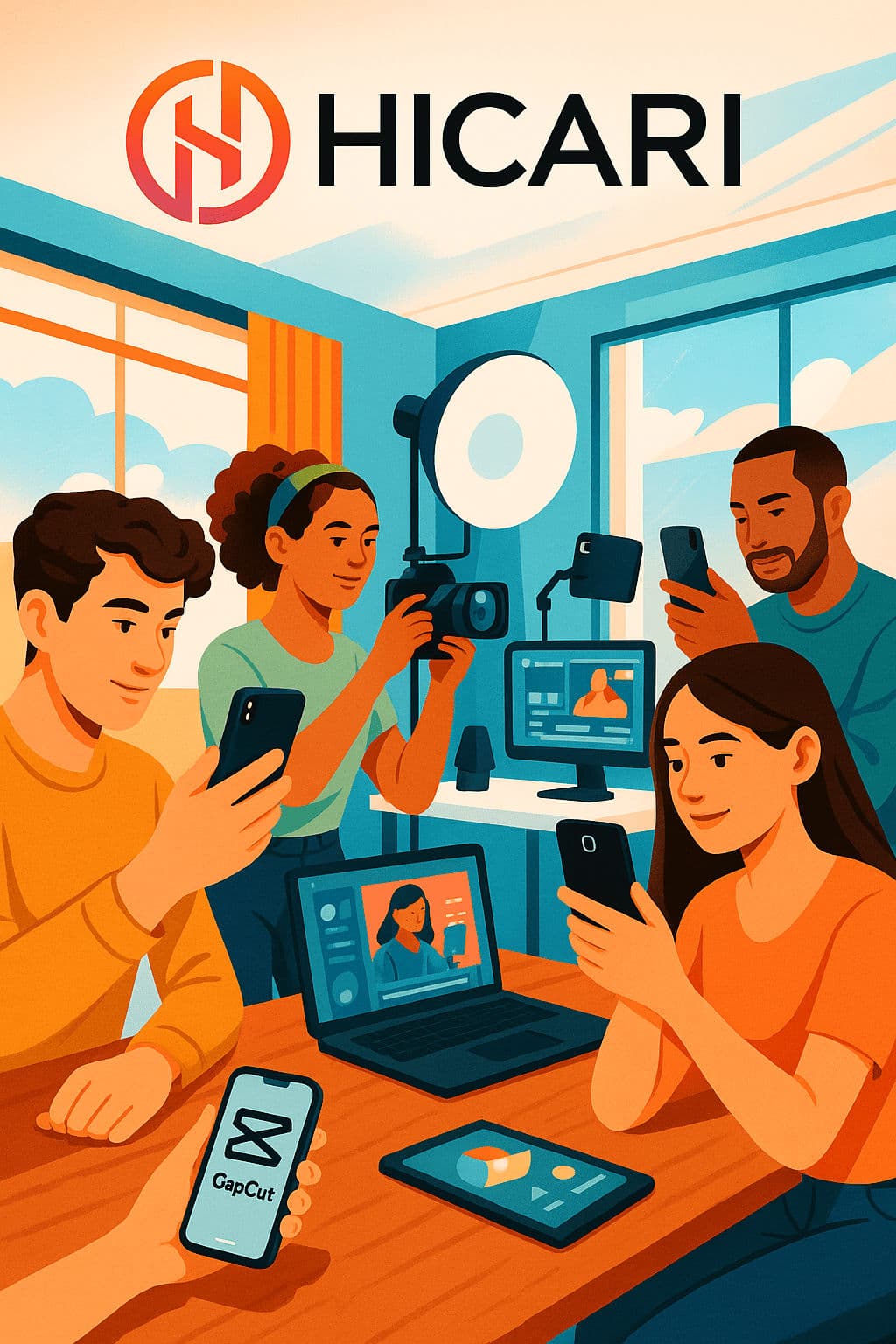
You do not need the latest iPhone or professional recording equipment. Start with what you have. Record example videos and practice editing with apps such as CapCut, Canva, or Edits (ideal for getting started if you have limited editing knowledge, as it is 100% free).
4. Sign up for creator platforms—don’t contact brands
Upload your portfolio and apply to brand briefings. At HICARI, you can get started in minutes: brands are looking for authentic creators without thousands of followers.
And no, don't contact brands. The people behind brands are tired of receiving dozens (yes, you heard that right) of proposals every day. You have a 1% chance of being read and starting to work with brands (and, if you're lucky, it will only be in exchange for products).
5. Keep learning continuously
Learn about scripting (say hello to AI and start consuming content on social media, follow profiles that talk about how to edit UGC videos, practise editing videos yourself…), social media formats, storytelling and, most importantly, video editing. Being a creator is a blend of art and technique.
Extra tip
Specialise in different video formats: vlog, POV, humour, sketches… This will help you stand out from the rest, rather than relying only on formats where you talk in front of the camera, which is what all UGC creators do.
Edit like a PRO
Editing accounts for 50% of success.
The power of the hook: capture attention in the first second
The hook is the first phrase, image, copy or message that appears in the video. Why is it so important? Because users decide whether to stay or leave within the first 2–4 seconds.
Examples of effective hooks:
- Direct question: “Did you know you can improve your skin with just one ingredient?”
- Clear promise: “This trick has helped me save €50 every month.”
- Curiosity-inducing phrases: “They haven't told you this about…”
- “Don't do this…”
Pay attention to your shots: it's not just about talking to the camera
A UGC video can be dynamic even when filmed on a mobile phone. How?
- Change shots: first sitting down, then walking around the house or outside. Break up the monotony with constant shot changes that keep viewers engaged.
- Change angles: move the phone slightly to create dynamism.
- Simple transitions—or not: a gesture, a turn or a quick cut is enough to maintain the pace. But if we want to capture attention, add some more advanced editing to the transition.
Or simply edit at a PRO level, as in this case:
Pacing and cuts: fast is better than slow
Remember: on social media, time is precious. If a sentence doesn't add anything, cut it. If a shot drags on, it becomes boring.
- Keep videos between 15 and 30 seconds for reels or TikToks.
- If it's longer, add pace cuts every 5–7 seconds.
Practical example:
- Hook (0–3s): “Want to know how I book flights for just €5?”
- Introduction (4–7s): “I'm Laura, and I'll tell you the trick.”
- Development (8–20s): close-up shots, quick cuts.
- Call to action (21–30s): “Would you like more videos like this? Comment.”
At HICARI, videos are between 15 and 30 seconds long, although longer videos are possible if you want them (for an additional fee).
How much does a content creator charge?
It depends on experience, format and the briefing. In UGC, the minimum is usually around €30 per video, but it can exceed €200 if it includes pro editing or requires greater complexity. A content creator with followers (similar to an influencer) who posts on their profile will not usually charge less than €200. That's if you work independently.
At HICARI, there are three types of content creators (Standard, Pro and Premium), with 3 different rates that can be increased if the brand requests modifications or additional videos depending on the deadlines, allowing creators to charge from €40 to +€100 per video. Sign up to HICARI as a creator to see the preset rates in detail.
Want UGC videos that work for your brand?
Create your free brand account and receive proposals from creators. You only pay per video.
Real examples of content creators
- @maria.lons (TikTok): records videos testing beauty products for brands without being an influencer.
- @laia.cebrian (Instagram): creator who produces UGC content in Spain about travel and getaways for brands such as Viajes Carrefour, Halcon Viajes and other companies in the sector.
- @annasvugc_ (Instagram / TikTok): explains how to create UGC content, edit videos, etc. Creates content for all kinds of brands.
Where does a content creator fit into a brand's marketing?
Good content can:
- Build trust and credibility.
- Increase conversions (purchases, downloads, leads, trust, how-to content).
- Entertain (yes, that's what social media is all about these days)
- Create videos for a brand's social media, as if it were its agency.
- Take on the brand's content creator role (formerly CM).
- Power ad campaigns.
- Be repurposed on social media and the website.
How to work with brands as a creator
- Sign up on platforms such as HICARI.
- Upload your portfolio (previous videos), add a good profile photo and put effort into your description.
- Apply to briefings that suit your style.
- Meet deadlines and deliver quality.
- Be professional: clear communication, polished deliverables and a proactive attitude.
- Take revisions in your stride. It’s normal—you’re not inside the brand’s head. A good attitude will help you work with that brand again or get recommended.
Creating content VS AI-generated content
And the million-dollar question: if you can make a video with AI, why should I become a content creator? AI videos vs UGC videos.
- An AI video will never convey warmth, trust and credibility, no matter how close to reality it may become. No, because AI will be too perfect.
- Major brands aren’t going to stop investing in real content. And I’m telling you this as someone who works for one.
- Social media isn’t going to fill up with AI-generated content, because… (almost) nobody would consume it and the platforms would shut down. It won’t happen.
- Because what sells is what’s real and authentic. That girl with the Cádiz accent, that guy with the background from his home, that girl with her distinctive way of editing…
BONUS: Work for FREE if you have no experience to build your portfolio
Yes… it’s not crazy at all.
Think of interns who work for free for hours and months to learn. This is similar: if you have no experience and want to build a portfolio, consider making 2–3 free videos for brands.
Don’t know which brands to approach or how to do it? Get in touch with HICARI! We’ll recommend brands to help you get started and launch your career as a content creator.
So… is becoming a content creator worth it?
Yes. Today more than ever, brands need authenticity and fresh formats. And you can bring that value. Being a creator isn’t the same as being an influencer. Being a creator means understanding how to tell a story with a video, an image or text… and making it connect with the person on the other side.
If you want to get started, HICARI makes it easy. Sign up for free as a creator or brand and start working with authentic content today. Make videos that will blow up on TikTok or Instagram.
Ready to create custom UGC videos?
Sign up for HICARI and create UGC content for brands. Your follower count doesn’t matter here.
Frequently asked questions
What’s the difference between a UGC creator and an influencer?
A UGC creator produces content for brands without needing to publish it on their personal social media or have followers. An influencer shares content on their own social media for their audience and seeks impact and visibility.
What equipment do I need to start creating content?
You don’t need the latest iPhone or professional recording equipment. You can start with what you have, record sample videos and practise editing with apps such as CapCut, Canva or Edits.
What makes a UGC video more engaging?
A strong hook captures attention at the start, while changes in shot, angle, transitions, cuts and a fast pace help maintain it. For Reels or TikToks, keeping videos between 15 and 30 seconds is recommended.
For brands
UGC videos for your brand
Free sign-up. Get proposals from creators and pay only per video.
Create a brand accountor talk to the team