
In short
- A UGC campaign publishes microcreators’ content on their own channels to achieve authentic visibility and amplify it with Paid.
- The HICARI method recommends starting with volume, segmenting profiles and defining organic or Paid usage.
- You can review applications, select creators, validate content and receive publication links without endless DMs or contracts.
In this article
I'll start with a scene that happens more often than it should: a brand writes to us and says something like:
“We want to create new UGC Ads because what we have no longer works” (basically, they've read something about UGC and want to try it)
They show us what they're using:
- Perfect spots
- Corporate voiceovers
- Flawless creatives
- The creative's price displayed prominently
- At best, UGC Ads but… very ad-like
And the problem is simple:
It looks like advertising. ARRRGHHH it makes me shudder.
And today, in 2026, that's almost an insult to the algorithm… and to people. Because we're all immune to it. But then something curious happens. We try a video recorded by a real person, on a mobile phone, saying:
“I thought this was going to be a hassle, but it literally took me 2 minutes…”
Damn, saying “literally” works so well. Literally.
And suddenly:
- CPA goes down
- CTR goes up
- People comment
- It feels like someone is genuinely talking
That's UGC.
And that's why it's changing marketing.
What is a UGC campaign (without a boring definition)
UGC is content that doesn't look like an ad, even though it is.
It's not “production”.
It's “people”. And that's what makes it so powerful.
UGC campaigns, unlike UGC videos where the creator delivers the content to the brand for its use, are posted on the creators' social media.
A campaign allows you to activate microcreators (1k–8k followers) to talk about your product on their own social channels:
- TikTok
- Instagram Reels
- Instagram Stories
- YouTube (Shorts or Horizontal)
It can be collaborative (Instagram) with the brand or not, although in most cases it isn't. It's simply posts on the UGC creators' social media.
Real content, small audiences but incredibly authentic and… amplification with Paid.
What do you get from this?
Launching a campaign allows you to:
- Have 5, 10 or 20 creators post about you at the same time
- Generate visibility at scale, without relying on an expensive influencer
- Reach audiences segmented by:
📍 city
🎯 niche
👤 audience type - Get content that feels like a recommendation, not an ad
The video you receive is an extra.
The goal is this:
📢 Have your brand appear on social media, many times, naturally. And amplify it with Paid using precise targeting.
UGC isn't influencer marketing (and this gets confused all the time)
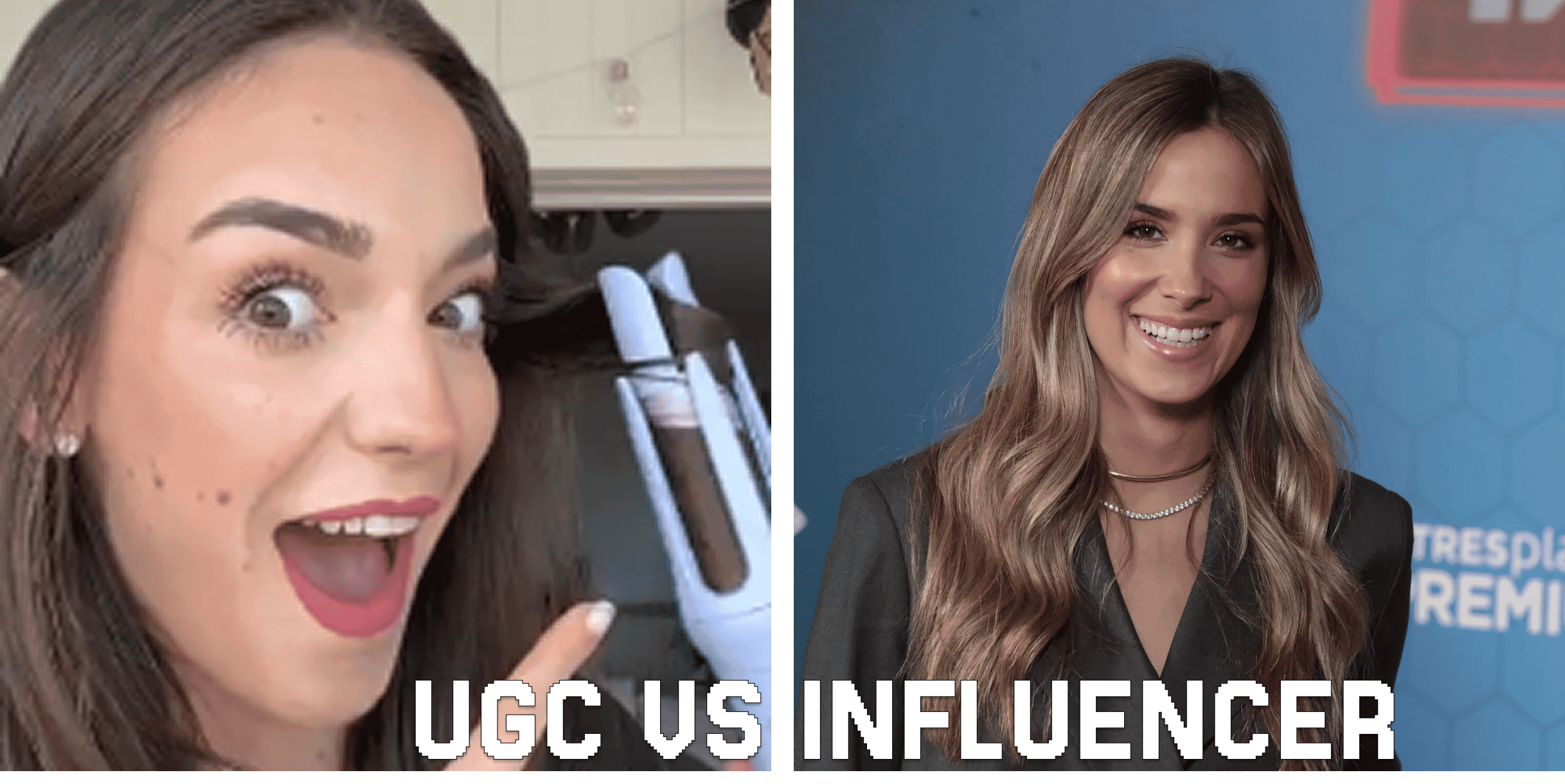
This is important because many brands come to us saying:
“We want influencers or micro-influencers”
But what they really want is something else.
UGC vs Influencer: Where is the real impact?
An influencer is theoretically about:
- Reach
- Audience
- Brand Awareness
And the talent agency tells you they have top influencers for your campaign in Seville, while forgetting to mention that, on average, their audience is from Latin America. In other words, visibility among people in Chile for your Seville campaign—a fantastic ROI. Irony intended.
UGC is:
- High-quality, conversion-focused videos with targeting controlled by the creator's location and demographics
- You control reach with high-quality, targeted Paid content
Although the objective is the same in both cases—visibility—with UGC it's more visibility + performance, while with influencers it's visibility + brand.
When UGC becomes magic: real examples
Let’s look at 2 use cases:
- Giving a physical store local visibility. You select creators from your city → they post from your location → people discover it because “it’s happening nearby”. Plus, that video is amplified with Paid, targeted to that specific area, giving you 10 quality pieces of content + visibility among their audiences + highly geographically targeted Paid.
- Launching a campaign / offer. Instead of 1 big collaboration… We activate 15 microcreators talking about your launch in the same week. Result: much more buzz, greater trust and more cumulative reach.
How to launch a UGC campaign with real creators (the HICARI method)
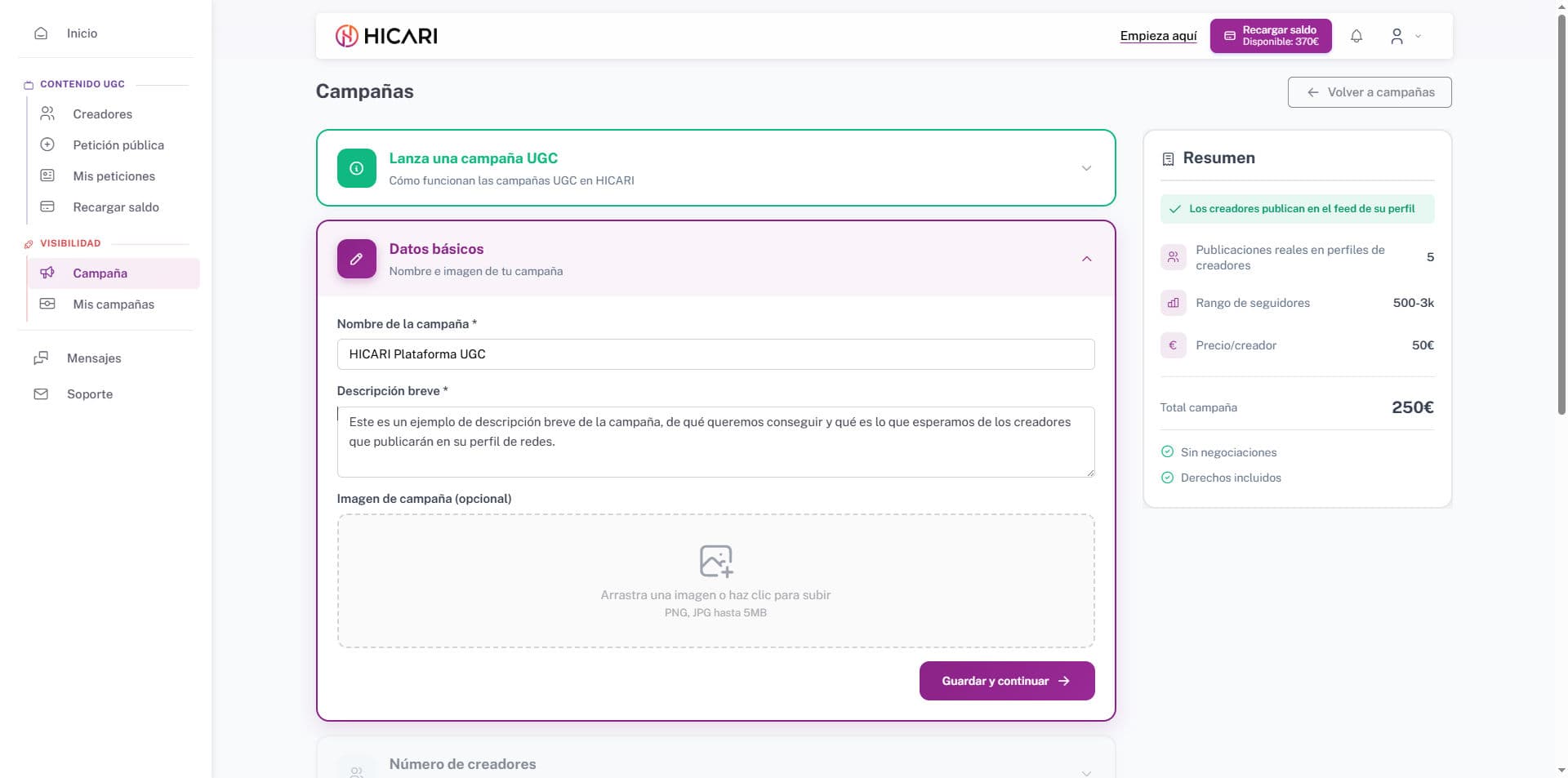
This is where HICARI comes in. Because the hard part isn’t “making a video”. The hard part is building a scalable system. Here’s how we do it:
Objective: visibility on creators’ profiles
- Define the number of content creators who will post on their profile and their followers
- Indicate how the content will be used: 100% organic or Paid
- Select the content type and brief details and launch the campaign.
- Once launched, you’ll receive applications from creators, and you’ll be able to review their profiles and select them.
Want UGC videos that work for your brand?
Create your free brand account and receive proposals from creators. You only pay per video.
1. Start with volume (at least 5 creators)
This is something we always repeat: with fewer than 5 creators, you’re not running a campaign—you’re testing. In a single campaign, this often happens:
- One is just average.
- One creator performs normally
- Another surprises you
- One takes off
- Another creates incredible content that you want to use on your social media.
And that’s where you start building.
2. Choose the follower range (spoiler: smaller creators sometimes win)
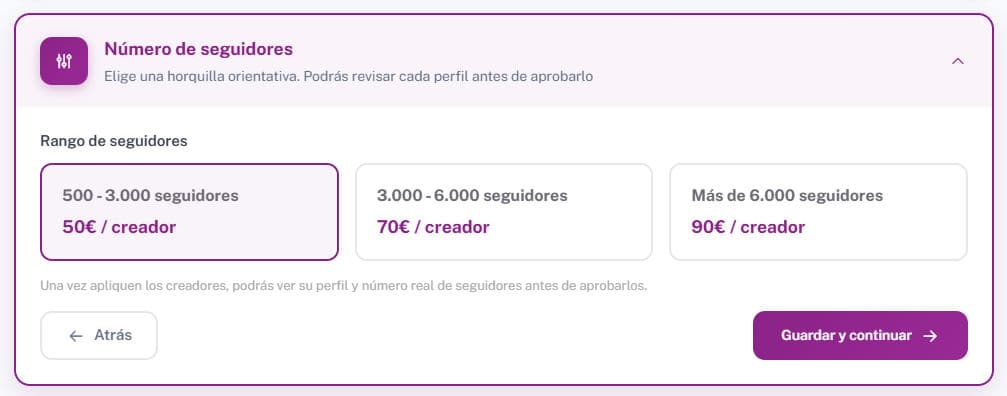
On HICARI, you can segment by community:
- 500 – 3,000 followers
- 3,000 – 6,000 followers
- More than 6,000 followers
And here’s our opinion: Many times, the best videos come from smaller profiles. Because they literally look like customers. Not creators. And that… is gold.
3. Organic vs Paid: include Paid, even if it’s just €20
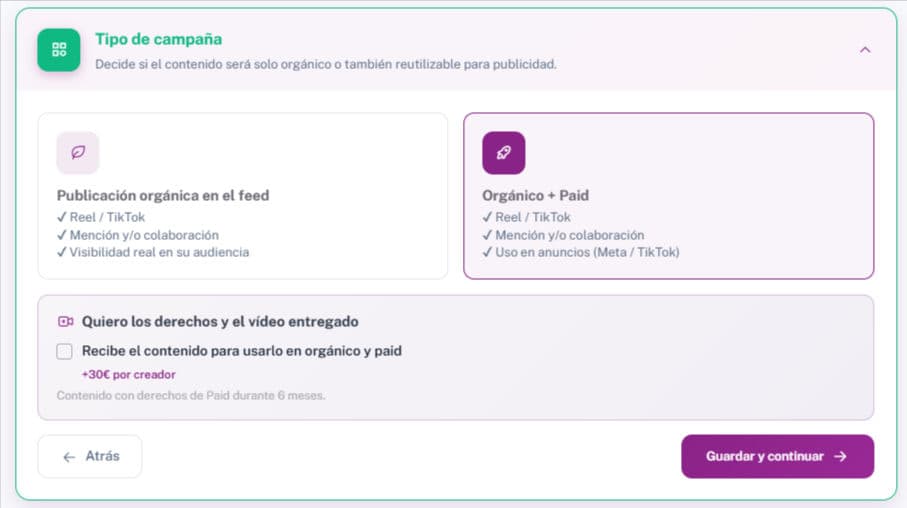
This depends on the brand. But honestly: almost all of them end up amplifying with paid.
Because UGC is powerful, but the organic audience of these creators with micro-audiences is limited. And paid lets you do things like:
- “I want people in Madrid to see this video”
- “Only users near the theatre”
- “Targeted by interest and location”
Clear example:
- A musical doesn’t need global views.
- It needs local sales.
- UGC + Paid = emotional precision.
Yes, Stage and its musicals such as The Lion King and Cinderella are our client—do you want to be one too?
4. Extra deliverables in the campaign
On HICARI, you can define whether the creator provides:
- Collaborative post
- Instagram Stories
- Tags or mentions
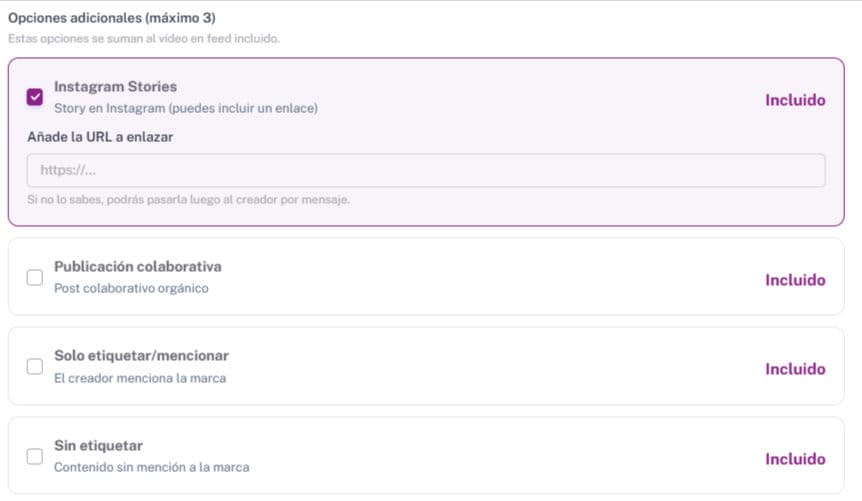
This multiplies touchpoints. And many times, a spontaneous Story sells more than the feed.
5. Launch, receive applications and choose quickly
Once you launch the campaign:
- You start receiving applications from real creators.
- You review their style, tone and vibe.
- You select the creator, with the ability to review their profile, social media and portfolio.
- You validate the content. Or request changes.
- The creator posts on their social media and sends you the link.
- No endless DMs. No contracts.
- No chaos.
If you want to launch a UGC campaign with real creators
At HICARI, we’ve worked with brands such as: Yoigo, MasterD, Quehoteles.com, TotalEnergies, Flexicar… and productions such as The Lion King, Cinderella and The Pillars of the Earth (see examples of videos from HICARI clients here), and what we do is simple:
Real campaigns with real creators that work in ads.
Frequently asked questions
What is the difference between a UGC campaign and UGC videos?
In a UGC campaign, creators publish the content on their own social channels. In UGC videos, the creator delivers the content to the brand for its use.
Which channels can creators use in a UGC campaign?
They can publish on TikTok, Instagram Reels, Instagram Stories and YouTube, both as Shorts and in horizontal format. The post may or may not be collaborative with the brand.
What can be targeted when launching a UGC campaign?
You can choose the follower range and define targeting by city, niche and audience type. You can also indicate whether the content will be used 100% organically or as Paid.
For brands
UGC videos for your brand
Free sign-up. Get proposals from creators and pay only per video.
Create a brand accountor talk to the team