
In short
- Reducing UGC to speaking to camera limits differentiation due to saturation, low retention and the perception of being an ad.
- Formats featuring stories, everyday situations, humour or relatability can improve retention and engagement.
- To do it right, think in scenes, write a simple script and choose creators who fit the story.
In this article
UGC has become one of the cornerstones of any modern digital marketing strategy (see here how to create a digital marketing strategy in 2026). Brands of all sizes use it, from ecommerce to B2B, because it connects with authenticity and reduces the perception of “traditional advertising”, making it ideal for organic, paid or a mix.
However, there is now a widespread mistake that greatly limits its impact: reducing UGC to people talking to camera. That format can work… until everyone does it the same way. And when everyone does the same thing, it stops standing out.
In this article, we explore why this simple form of UGC is no longer enough (in many cases) and which alternative formats you can use to make your content truly work —both organically and in paid campaigns.
Many brands think that UGC = talking to camera. And it doesn’t.
UGC isn’t just:
- Someone in front of a white background
- Explaining product features
- Using a neutral or corporate tone
That can be a video, yes, but it isn’t all UGC. Limiting yourself to that format makes your content look the same as your competitors’… and that kills differentiation.
The purists will talk here about how UGC began and blah blah blah… Instagram also began as a photo-based social network, and look at what it is now. Open mind and evolution, guys.
Why talking-to-camera UGC no longer works as well
There are basically 4 reasons why this format has stopped standing out, although that doesn’t mean it can’t work well depending on the client and strategy:
Saturation
Many creators and brands use the same approach: a person talking to camera with a short script. Viewers “smell” the format and ignore it.
Low retention
Static videos without a narrative tend to lose attention in the first 2–3 seconds, no matter how good a hook you use.
Little interaction
They don’t invite comments or shares because they don’t generate strong emotions or situations people can identify with. And that kills organic performance (for Paid, it’s okay).
Perceived as an ad
If it feels like a corporate message disguised as something spontaneous, the content fails to build trust.
This phenomenon can be seen, for example, in numerous TikTok formats where the most native content doesn’t show a person speaking directly to camera but instead introduces ideas through everyday situations or POV-style videos.
The real problem isn’t the creator, it’s the approach
The creator isn’t the message. The creator is the vehicle that interprets a story.
When your only goal is “to have them say something about your product”
You end up with monotonous videos that don’t connect. This happens because audience attention is won through:
- Recognisable situations
- Stories
- Humour
- Emotion
- Conflict and resolution
If your UGC says nothing beyond “this is good”, nobody will stay to watch it all the way through.
UGC formats that work better than just talking to camera (sometimes)
Here are alternative formats that help your content stand out without losing authenticity:
VLOG-style UGC
Tell a story. Hook viewers, retain them, connect.
Example: a creator films “a day doing X”, showing what they do and where, naturally and organically introducing a service or product that adds value. This generates retention because there is a narrative.
It’s also something TikTok itself recommends in its Ads: using POV in its Ads.
POV (Point of View)
This format puts the viewer in the creator’s shoes.
Example: “POV: you get home after a long day and this makes you feel better…” You don’t need to show your entire face; the viewer identifies with the scene.
Short sketch
Mini stories with humour or conflict, or that aim to put themselves in the user’s shoes and empathise. Ultimately, content that users can see themselves reflected in encourages sharing—and that’s social media magic.
Example: “When you try to use X product incorrectly… vs how it is in real life”. This type of video often generates comments and shares because it provokes laughter or recognition.
Reporter / interview style
Questions in the street or to real users about their experiences.
Example: asking “how do you use it?” or “what would you change about X?” This generates highly spontaneous UGC and real social proof.
Everyday situations
Genuine moments, without a formal script.
Example: someone trying to open a package, reacting spontaneously, or showing real life or telling a story about a problem (as in the case of our client Mood Earplugs). These types of videos feel real and usually retain viewers better than a flat speech.
Exception where this format works well
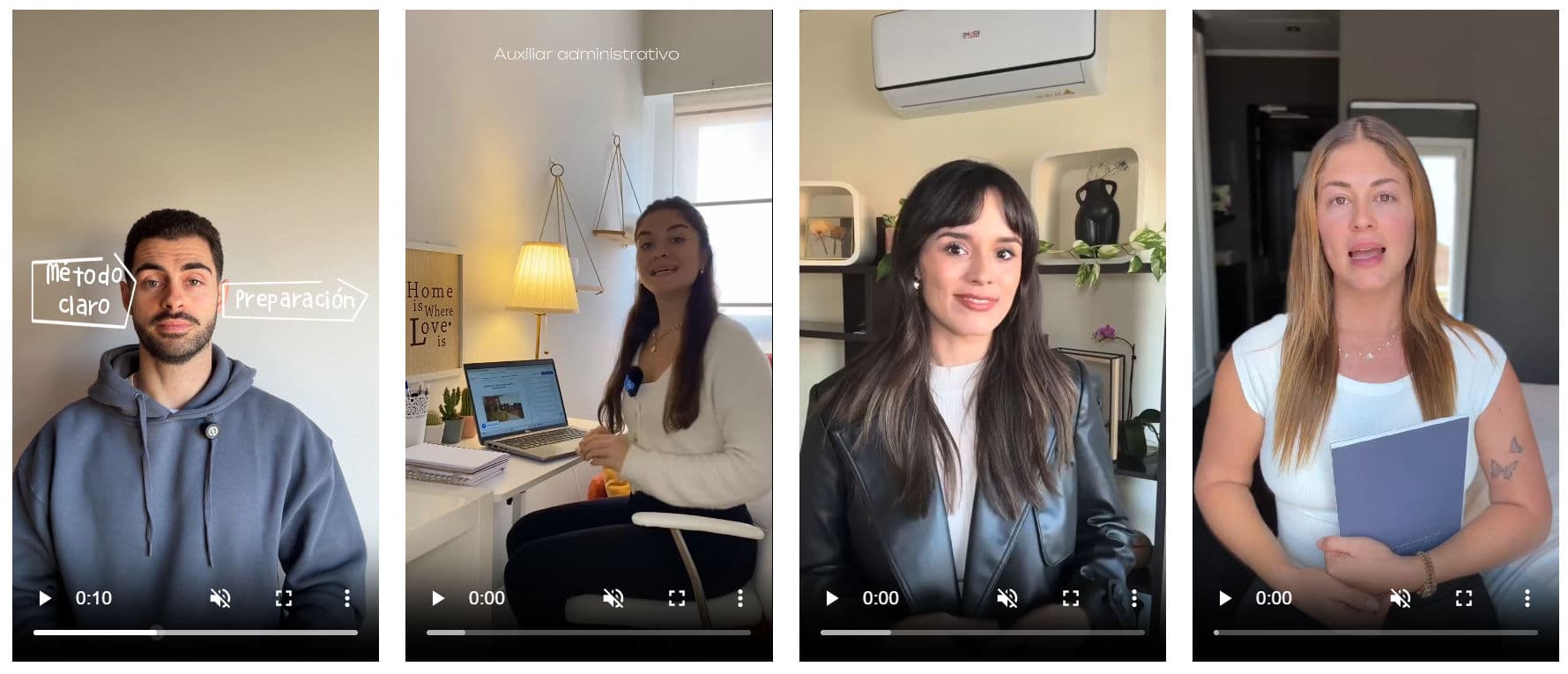
A clear example is our client MasterD, which creates testimonial videos speaking to camera for its social campaigns (see examples here). This allows them to scalablely produce content for all their courses using a structure that works for them and enables them to generate content quickly.
Do you want UGC videos that work for your brand?
Create your free brand account and receive proposals from creators. You only pay per video.
Why these formats work better
Content that connects tends to have:
- Higher retention. Users keep watching for longer because there is something different from the usual: a story to tell, a problem to solve, or an everyday situation (sketch). Higher retention means greater organic reach and a higher likelihood of clicks (CTR) in Paid campaigns.
- More engagement. Formats that encourage viewers to relate, laugh, or react generate more comments and shares. And more clicks.
- Lower perception of being an “ad”. When content feels like a real anecdote rather than a sales pitch, it is perceived as valuable content, not advertising.
- Better performance in UGC Ads. The algorithms of Meta and TikTok prefer videos that feel organic, not polished ads.
How to start creating UGC effectively (without overcomplicating it)
- First, use the HICARI platform to create content at scale
- Second, if you have questions, let us advise you
If you want to do it on your own, here is a simple roadmap:
1. Think in scenes, not lines
Before recording, define what situation you are going to show. What problem are we going to solve and what scenario do we want to present? Not “what line will they say”.
2. Write a simple script
You don’t need a two-page film script.
3. Choose creators as actors
Don’t put just anyone who catches your eye in front of the camera. Choose people who fit the role and the story you want to tell.
Common mistakes when working with UGC
Avoid these mistakes if you want to grow:
- Improvising without a clear idea
- Forcing a corporate speech
- Copying trends without context
- Talking about the product without showing context
- Always using the same format
UGC is about showing, not telling
Reducing UGC to “speaking to camera” is a strategic mistake. Effective UGC:
- Creates situations
- Generates emotions
- Conveys meaning
- Feels authentic
- And feels natural
If you want your content not only to be seen… but to convert, retain and engage, think first about what story you want to tell and then about who is going to interpret it.
Frequently asked questions
What UGC formats can work better than speaking to camera?
You can try VLOG, POV, short sketches, interviews, reporter-style videos or everyday situations. These formats help tell stories, create relatability and feel more natural.
When can speaking-to-camera UGC work well?
It can work for certain clients and strategies. MasterD uses testimonial videos featuring people speaking to camera for its social campaigns, with a structure that allows it to create content for its courses at scale.
How can I start creating UGC more effectively?
First think about the scene, the problem and the scenario you want to show, rather than focusing on a line. Then write a simple script and choose creators who fit the role and the story.
For brands
UGC videos for your brand
Free sign-up. Get proposals from creators and pay only per video.
Create a brand accountor talk to the team